A program of six films encourages reflection on the direction in which humanity is heading • Filmmakers from different countries speculate about life in the coming decades
Denmark being evacuated due to flooding, Rome plagued by a water lasting several years, or a planet where there might not be any humans left. These are the possible scenarios of tomorrow as envisioned by the filmmakers of today. From 22 to 27 July in Fužine, the Cinehill festival takes us on a journey through different dystopian yet quite realistic scenarios. The side program Visions of the Future offers a fascinating insight into how filmmakers from different countries anticipate life in 10, 30 or even 50 years, posing intriguing questions about human existence, society and the environment in the coming decades.
The program presents Happyend directed by Neo Sora, which premiered in Venice. Set in a Tokyo of the future, burdened by earthquakes and growing surveillance, this dystopian Japanese drama traces a friendship being re-evaluated amid social polarisation.
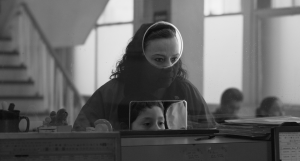
The powerful miniseries Families Like Ours, directed by Oscar winner Thomas Vinterberg, imagines a near-future Denmark facing complete evacuation due to catastrophically rising sea levels. Having premiered in Venice, the series tells a story about the disintegration of society and family, devoid of the customary blockbuster scenes, instead subtly showing how disaster creeps into everyday life.
In White Plastic Sky, the Hungarian duo Tibor Bánóczki and Sarolta Szabó takes us to the year 2123, where the human race survives thanks to a gruesome compromise – by turning into trees at the age of 50. This eco-dystopia, awarded at Berlinale and Animafest, is a moving story of love and sacrifice in times of climate breakdown.
Jóhann Jóhannsson’s Last and First Men is a true dystopian SF elegy about a disappearing utopian community, its history narrated by Tilda Swinton’s hypnotic voice accompanied by a minimalist score. An additional curious feature is that the film was made on 16 mm film, with the former Yugoslav monuments to the National Liberation War serving as backdrop.
Visions of the Future also includes The Hole, directed by Tsai Ming-liang, a sci-fi musical set in 1999 Taipei, hit by the pandemic. Awarded in Cannes, the film explores the longing for closeness through the unusual relationship between two neighbours divided and brought together by a hole in the floor. Finally, the acclaimed Italian director Paolo Virzì brings us Dry, an apocalyptic dramedy set in Rome that has not seen any rain in three years. Having premiered at Venice’s Mostra and boasting a compelling cast, the film follows the fates of survivors living amidst gradual social collapse.
In the tame ambience of Gorski Kotar, Visions of the Future promise a unique look at the challenges and opportunities that await us, encouraging us to think about the direction in which humanity is heading. Individual tickets for these as well as the other films in Cinehill’s rich program, head over to the festival’s official website, at: cinehill.eu/en/tickets. The festival is supported by the Primorje-Gorski Kotar County and the Tourist Boards of Kvarner and Gorski Kotar, and is co-organised with the Municipality of Fužine.