“Stipe will get better soon. We still have a lot of plans”, said Viki Grošelj last night, receiving Cinehill’s honorary 50 Years Award on behalf of Stipe Božić at the Damside Theatre in downtown Fužine.
The crowded auditorium dedicated a heartfelt applause to Stipe Božić wishing him a speedy recovery. The awards ceremony was followed by the screened of the documentary Alpine Warriors, a moving and inspiring story about “a group of crazy Slovenians and one Dalmatian”, as Bernadette McDonald, the author of the book on which the film is based, called them.
Directed and shot by Božić, the documentary presents the testimonies of the surviving participants of legendary expeditions, including Grošelj himself, Božić’s long-time friend, colleague, and climbing companion. Earlier in the day, in a conversation with the audience moderated by Cinehill’s selector Jurica Pavičić, Grošelj spoke more about Alpine Warriors and the incredible expeditions captured in the documentary.
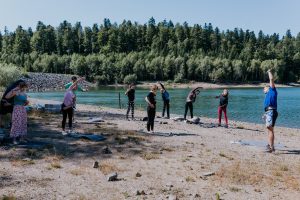
Reclining in deckchairs in the cool shade of the forest at Rakov Jarak, the audience absorbed the words of a man who conquered more mountain peaks with Božić than most can even count. Grošelj spoke about the seductiveness of mountaineering – a world that Božić faithfully transferred onto the screen using authentic footage from his 50-year-long career. This documentary is not just an ode to the mountains – it is also a story about a great friendship.
“The reason why the film focuses on Slovenian mountaineering is that Stipe was part of our team – us Slovenians, along with him on our team, formed an important part of Yugoslav alpinism. Those were nice collaborations. We tried to make sure that each republic had at least two representatives, but the Macedonians, Serbs and Montenegrins were not that interested”, recalled Grošelj.
“Can the love for this often dangerous and demanding sport be related to the place where one grew up?” asked Pavičić. That is, did Grošelj’s daily vista of the streets of Ljubljana with a view of the Alps in the background, or Božić’s view of the Biokovo Massif, foster their penchant for mountaineering?
“I wouldn’t say so”, Grošelj answered briefly. “As Stipe beautifully described it, those born by the sea rarely go swimming. We do not appreciate what is right in front of our noses. The desire to become an alpinist comes from within.”
That desire, he added, was very strong – because they had to survive great losses. During their 18 joint expeditions they lost seven friends.
“After such tragic events you always ask yourself: does it make sense to go on? And the answer has always been – yes. We all lived for the same dreams. If they are no longer with us, it is up to us to continue climbing, to continue living that dream. Alpine “arriors, which Stipe had the strength to finish, are a monument to them”, said Grošelj.
However, he added, we didn’t just climb. That made up maybe 30 percent of the work. Everything else was organisation and planning – especially in the age before the internet and developed tourism, when every start was literally a journey into the unknown.
Even today, Grošelj points out, there are perfect challenges – it could be on Triglav, or in the Himalayas. But a lot has changed.
“Mountaineering has become part of the tourist offer, and it is good that it has. The local Nepali population today makes a living from alpine tourism”, Grošelj points out.
The Sherpa climbers have an extremely important and demanding role. Over the years, Slovenian alpinists have founded a school for mountain guidance intended for the local population of the Himalayas. It trains future guides, as well as the children and grandchildren of their fallen and missing colleagues.
Now, when they’re no longer worried about chasing the highest peaks anymore, their find the greatest pleasure in helping these people.
“Vedran Mlikota, Stipe Božić, and a few of our other friends have done a great thing. After the terrible Nepalese earthquake, which I myself survived, together they delivered huge amounts of aid to the local population”, recalled the Slovenian alpinist.
At one point, Pavičić invited Vedran Mlikota to the stage. Although he says that he is only an amateur alpinist, he climbed a peak over 6500 metres high with a group of friends known as Himalayan Vlaji.
“No photo or film shot can evoke what you feel when you stand up there – with two giants, Božić and Grošelj – and your view reaches hundreds of kilometres around, with nothing but white peaks in sight. And the two of them just point with their fingers: Do you see that one? We climbed that one too”, Mlikota described vividly.
At the end of the conversation, Pavičić asked an on-the-nose but necessary question: how did all those years of expeditions and dangers affect family life?
“I knew this question would come up, so I brought my wife”, Grošelj said, with a smile, and handed the microphone to his wife Cveta.
“When you see them off at the airport for the first time, you think – it’s okay, nothing can happen. And then, as each time fewer of them return, you start to wonder: are we next? But you can’t tell the man you love to stay home. If something happens, you know that he was where he wanted to be. It wasn’t easy, but it’s how you grow”, said Cveta Grošelj.